
Brief overview
In accommodating the growing popularity of renewable and local energy sources, the two-way flow of electricity and information is necessary for maintaining efficiency and system security. EcoGrid EU and EcoGrid 2.0 were two projects held in Denmark designed to demonstrate the feasibility of such a system while incorporating demand-based pricing. The projects successfully demonstrated flexible consumption and how demand-based pricing encourages consumers to adapt their energy usage away from peak demand and toward peak production, all without compromising consumer heating comfort.
Challenge Addressed
While traditional electrical grids accommodate one-way flow, the growing popularity of renewable and local energy sources alongside electric vehicles has made the two-way flow of electricity and information necessary to avoid the inefficient utilization of renewables and power system insecurity. This reality is particularly pertinent in Denmark, where wind power constituted 30% of total electricity consumption in 2012 and was intended to account for 50% by 2020.
Solution & Implementation
EcoGrid EU and EcoGrid 2.0 were two projects consecutively held on the Danish island of Bornholm aimed at demonstrating the feasibility of a power system with greater than 50% of renewable energy sources.
- EcoGrid EU: Executed its first live test of the real-time demand-based pricing concept on 15 May 2013, with prices updated every 5 minutes to demonstrate flexible consumption; Carried out from 2011 to 2015 with €12.7 million in European Commission funding.
- EcoGrid 2.0: Demonstrated how demand response can enable customers to assist in the operation of a renewable-based power system via a supplier-centric model; Carried out from 2016 to 2019.
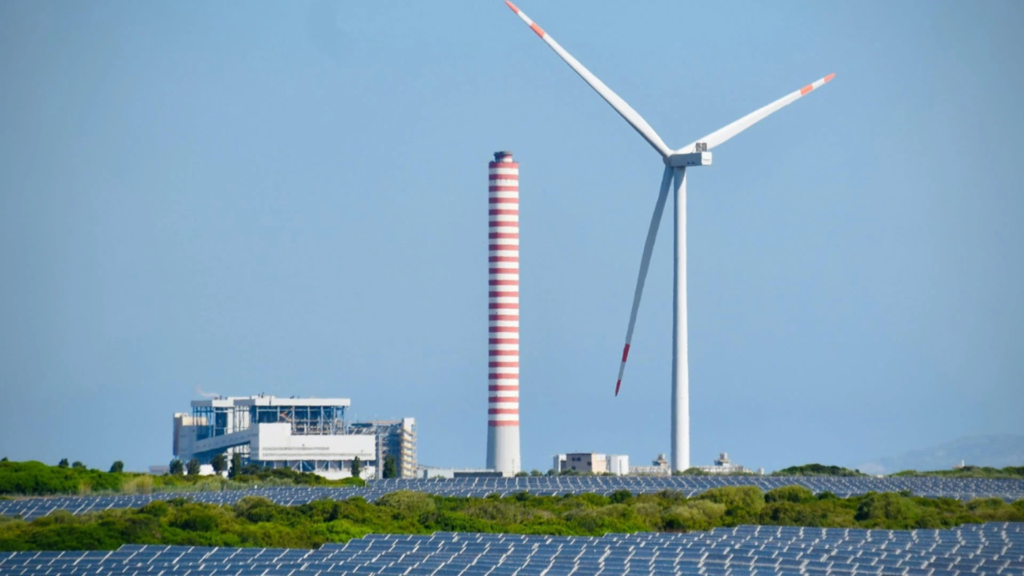
Coal, wind and solar power generation in one image – reason for this seemingly unusual setting is that the coal plant is being phased out, and the transmission capacity available shall not be wasted but instead used by renewable energy sources. (Photo by Arno Senoner on Unsplash)
Challenges Faced & Mitigation Strategies
While participation was voluntary and EcoGrid EU obtained hundreds of households immediately following the program announcement, a concerted recruitment campaign was necessary to obtain its total of 2,000 consumers. This involved direct mail, postcards, newspaper advertisements, and a demonstration event with live entertainment and refreshments. Because researchers could only perform demonstrations during cold weather, EcoGrid 2.0 was limited by the seasons, meaning that project delays had a significant impact. This challenge was partially mitigated by enforcing hard deadlines for deliverables.
Results & Impact
- Flexible Consumption: EcoGrid EU demonstrated its feasibility, with variable, demand-based pricing encouraging consumers to adapt their energy usage away from peak demand and toward peak production.
- Adjustment of Electricity Consumption: Proven possible by EcoGrid 2.0, reducing consumption by 300 kW for an hour and increasing it by 559 kW for an hour.
- Flexibility Market: EcoGrid 2.0 demonstrated that consumers can provide flexibility without compromising their heating comfort, which can be managed on a large scale in the power system and traded on a market based on the Supplier Centric Model.
- Recognition: EcoGrid EU won the European Sustainability Award.
Key Takeaways & Lessons Learned:
- Standardization: Necessary for success in a commercial flexibility market.
- Data & Digitalization: Capable of modifying consumption patterns, enabling greater renewable penetration, and improving the utilization of the power system’s capacity.
- Automatic Control Equipment: Responsive to demand-based pricing, while customers without it did not exhibit demand response.
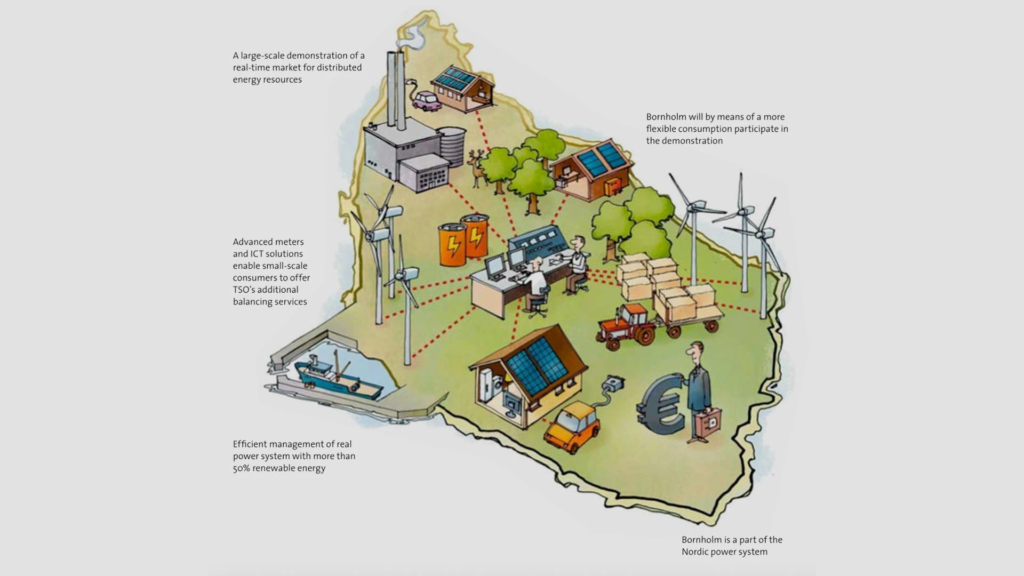
Illustration of the EcoGrid EU on the Danish island, Bornholm
References & Further Reading