
Brief overview
In 2023, Bulgaria’s Electricity System Operator (ESO) announced that it requires 3000 MW of new pumped-storage hydropower plant (PSHPP) capacities due to the inconsistent output of renewable energy sources and balancing services they require. To meet this goal, two new PSHPPs are set to be constructed, known as Dospat and Batak, while the Chaira PSHPP is currently undergoing rehabilitation. Once completed, these three facilitates will produce a total of approximately 2.4 GW and ease the load on Bulgaria’s energy grid with 24-hour and weekly management and balancing services.
Challenge Addressed
In 2023, Angelin Tsachev, the executive director of Bulgaria’s Electricity System Operator (ESO), announced that it needs more than 3000 MW of new PSHPP capacities in the next 4 to 5 years. This need is derived from renewables’ intermittent nature and the pressure they create on Bulgaria’s grid, with energy storage providing balancing services that further grid stability and reliability while reducing congestion. These projects, alongside the rehabilitation effort, mark significant long-term progress toward that goal.
Solution & Implementation
- Pumped-Storage Hydropower Plant (PSHPP): Generates hydroelectric power; Stores and later releases electricity to the power grid when necessary.
- Dospat and Batak PSHPPs: Set to be constructed underground and connected to the Dospat and Batak dams, respectively; Provide a combined capacity of 1.6 GW, or 800 MW each; Estimated total cost of €900 million each; Estimated to be completed by 2032; Operated by Bulgaria’s National Electricity Company (NEK).
- Chaira PSHPP: Inoperable since March 2022; Rehabilitated Unit 2, which successfully re-entered service in late 2024; Parallel rehabilitation of Units 1 and 3 to be carried out throughout 2025, which are expected to re-enter service by early 2026; Units 1 and 4 will be completely replaced to ensure sustainable long-term operation.
- Advisory Support: Provided by the European Investment Bank (EIB) to the NEK to examine the technical feasibility and economic viability of the Dospat and Batak PSHPPs to assess benefits and risks in pursuit of informed decision-making.
Challenges Faced & Mitigation Strategies
No notable challenges have been encountered thus far in the facilities’ preliminary stages.
Results & Impact
- PSHPP Capacity: Expect 1.6 GW from the Dospat and Batak facilities, as well as 864 MW in capacity and 788 MW in pumping mode from the Chaira plant upon rehabilitation.
- Expected Benefits: Enhancing energy security, improving energy infrastructure, and furthering Bulgaria’s decarbonization goals.
- NEK Advancements: Batak and Dospat will provide the NEK with flexible 24-hour and weekly management, rapid capacity replacement during emergencies, and additional balancing services.
- Plan Progress: Batak and Dospat are part of the Ten-Year Network Development Plan (TYNDP) 2024 of the European Network of Transmission System Operators for Electricity (ENTSO-E).
Key Takeaways & Lessons Learned:
- Alternative Storage Technologies: PSHPPs expand mechanical storage, thereby reducing reliance on lithium-ion battery supply chains for energy storage.
- Complete Replacement: Ensures the sustainable, long-term operation of a facility.
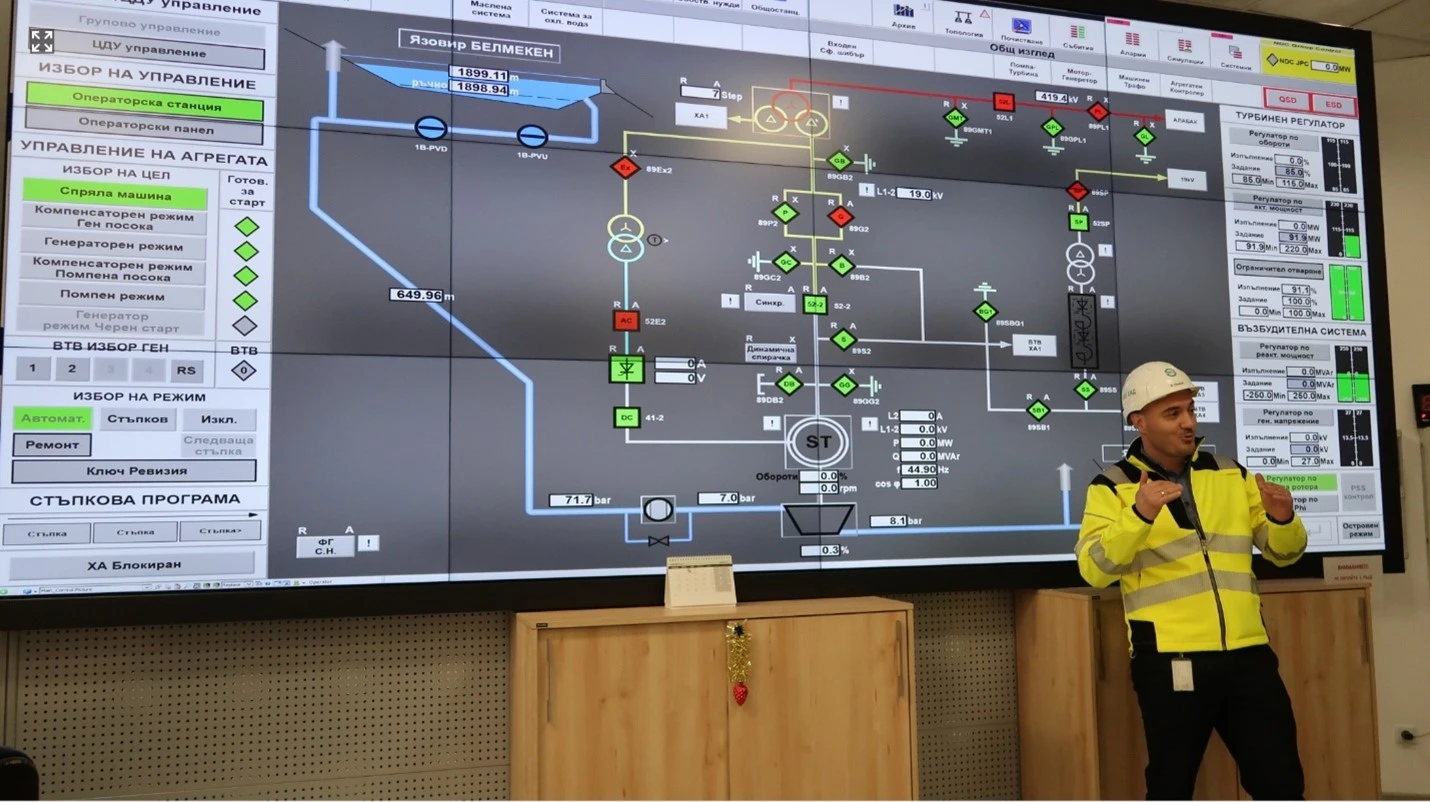
Rehabilitation of hydro unit 2 of Chaira PSHPP
References & Further Reading