
Cutting the Cord: Russian Oil Supply to Central Europe Is Not Indispensable
Hungary’s continued dependence on Russian crude oil is not driven by technical, infrastructural, or economic constraints, but by deliberate political and commercial choices that undermine EU sanctions and energy security.
Europe’s Blind Spots: The Shadow Supply Chains behind Russia’s Continued Petrochemical Sales
This report examines how Russia continues to monetise cheap domestic gas by converting it into fertilizers and plastics that enter the EU through third-country re-export hubs.
Fit for 2040: Reconciling Climate Ambition with Energy Security and Growth
The report argues that Bulgaria’s low-carbon transition is not a burden but a pathway to preserving energy security and industrial competitiveness.
Energy and Climate Security in Europe: From Crisis Response to Structural Transformation
The Russian invasion of Ukraine marked a turning point in Europe’s energy and climate security, exposing deep structural vulnerabilities in the EU’s energy systems.
Ending the State Central Planning Model in the Electricity Sector
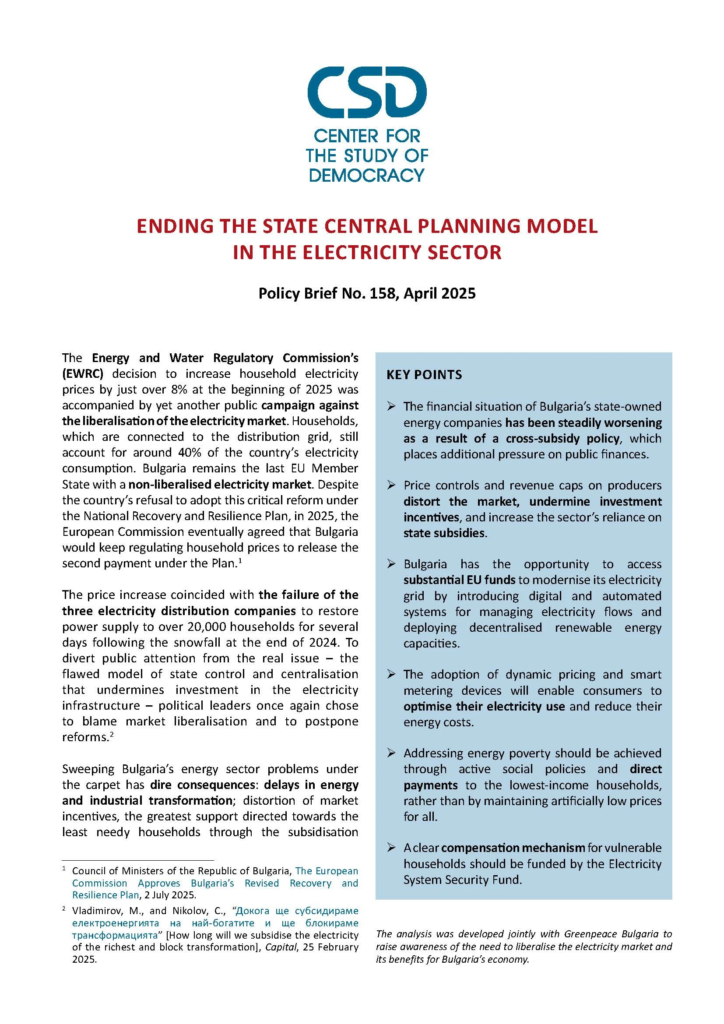
Bulgaria’s energy sector stands at a critical crossroads, hindered by distorted price regulations, cross-subsidisation, and the lack of a targeted social support system.
Strategic stalling: Czechia delays decoupling from Russian energy
Despite the ongoing war in Ukraine, Czechia continues to funnel billions to the Kremlin by purchasing Russian crude oil, petroleum products from Slovakia, and ramping up Russian gas imports.
Economic Security and Strategic Autonomy
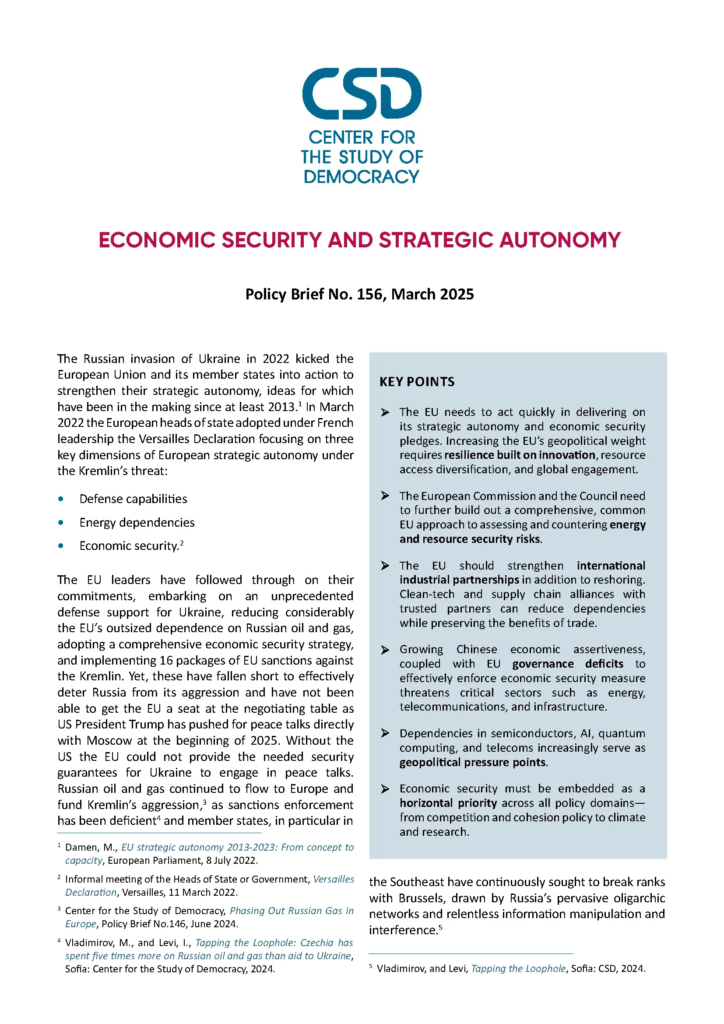
The EU’s reliance on external suppliers of critical raw materials and technologies threatens its economic security and strategic autonomy.
Realigning Bulgaria’s Energy and Climate Strategy
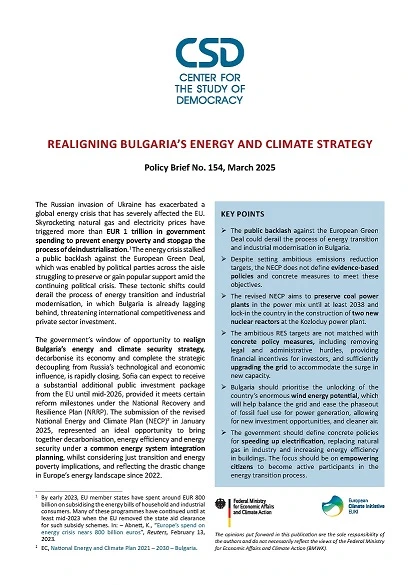
The revision of the National Energy and Climate Plan (NECP) has been an ideal opportunity to realign the Bulgarian and EU energy and climate security strategies to complete the strategic decoupling from Russian energy dependence, accelerate the just transition process and reduce the country’s widespread energy poverty.
The Kremlin Playbook against Offshore Wind Energy in Bulgaria
The current assessment examines the organised (dis)information campaign led by pro-Kremlin influence networks against the development of offshore wind energy in Bulgaria.
Low-Carbon Technologies: Roadmap for Deployment in Bulgaria by 2050
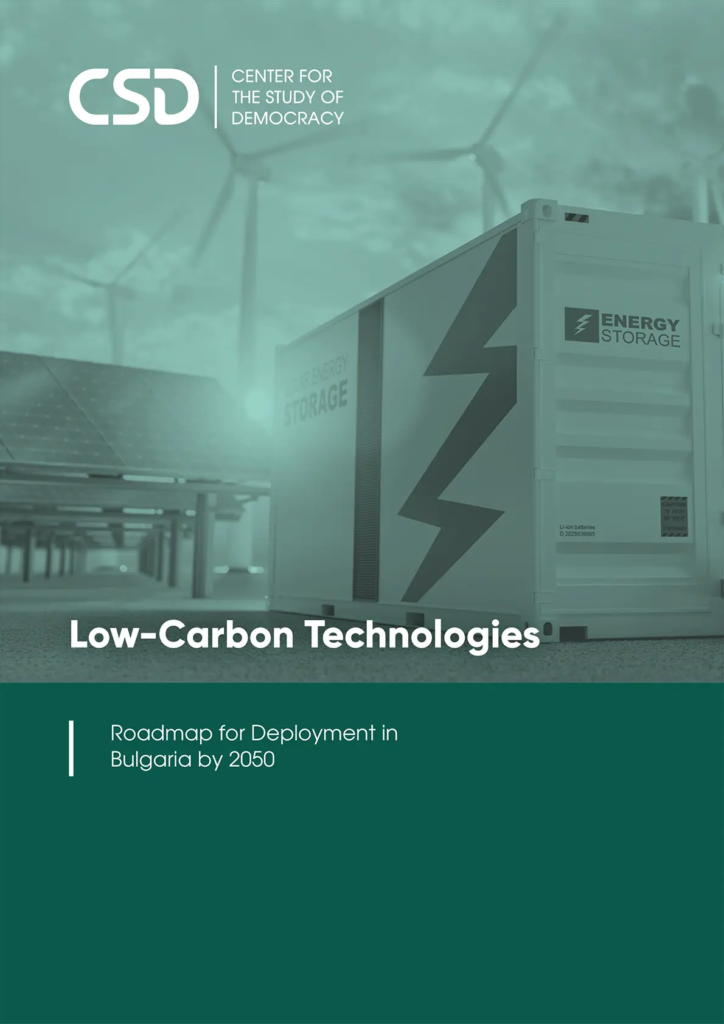
Renewable energy plays a key role in achieving Bulgaria’s decarbonisation objectives. Yet their deployment en masse will require a seismic shift in how electricity is generated, distributed and stored.