
The Backbone of a Reliable, Renewable Power System
Across the region, a growing share of low‑voltage lines are approaching end‑of‑life while connection queues, congestion, and curtailment rise. The EU Grid Action Plan and market‑design reforms set a clear direction to transparent planning, fast-track construction, improved asset utilisation, and channelling EU funding into digital substations and flexibility where it unlocks the most capacity.
The priority — especially at the distribution level —is execution, so that grids become platforms for integrating variable generation, accommodating increasing numbers of prosumers, EVs, and heat pumps rather than bottlenecks that slow down investment.
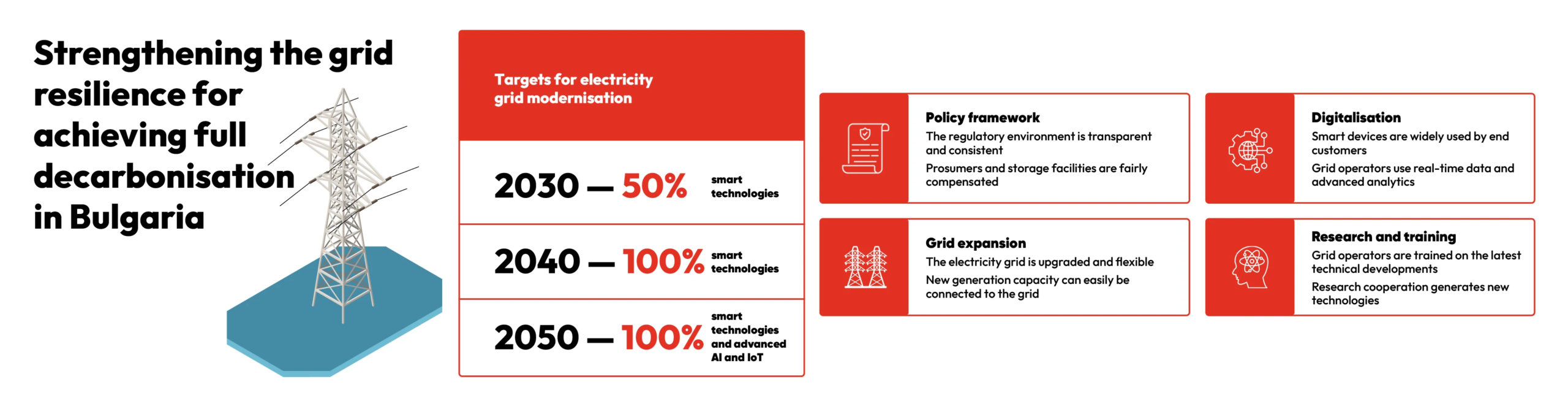
Smart meters, automated control, and secure data sharing let DSOs and the TSO balance local generation and demand, enable time‑varying tariffs, and support virtual power plants. At scale, these tools reduce curtailment, shorten grid connection timelines, and reduce balancing costs while improving power quality and reliability. Solar‑heavy build‑outs need evening and winter support from storage, demand response, and wind. Where batteries are deployed at scale, they already lower prices, reduce imports, and ease local grid strain.
The enabling framework ties it together: clear and transparent connection procedures, predictable and evidence‑based regulation, and fully liberalised markets that fairly value flexibility and storage. Affordability is best protected through targeted social support—not blanket price controls—so networks can still invest in modernisation and resilience.
Targeted upgrades plus digital tools—smart meters, real‑time analytics, automated control, and VPPs—turn passive networks into active systems that absorb high renewable shares with fewer curtailments and faster connections. Recovery plans, Modernisation Fund resources, and REPowerEU can front‑load critical reinforcements and digitalisation, lowering lifetime system costs and crowding in private capital.